In this guide
- How hair grows, and why some fall is normal
- The common causes of hair fall
- Why tests matter before treatment
- Treatment options for hair fall
- PRP vs GFC at a glance
- Who PRP and GFC suit
- What results to expect, and when
- Hair fall in women: special situations
- Hair fall in men
- What decides the cost
- Everyday habits that help your hair
- Dandruff, scalp health and hair fall
- Common myths about hair fall
- When to see a doctor
- Hair fall treatment at Dr. K, Charni Road
- Frequently asked questions
Hair on the pillow, in the shower drain, on your comb. At some point, most people start counting. And once you start worrying about hair fall, it is easy to reach for the first oil, shampoo or clinic package you see.
The most important thing to know is that hair fall is a symptom, not a diagnosis. Stress, iron deficiency, thyroid problems, genetics, a recent illness and hormonal changes all cause hair fall, and each is treated differently. PRP and GFC can be very useful, but only for the right type of hair loss, and only as part of a plan.
This guide explains the common causes of hair fall, the tests that matter, what PRP and GFC can realistically do, and how long results take. It is written by the team at Dr. K Skin Hair Advance Laser Clinic in Charni Road, where hair consultations are done by aesthetic physician Dr. Kajal Charaniya.
Quick answer: losing 50 to 100 hairs a day is normal. Sudden heavy shedding is often telogen effluvium, which usually recovers once the trigger is fixed. Gradual thinning at the crown or parting is often pattern hair loss, which needs long-term treatment. PRP and GFC are useful add-on treatments for thinning, not a replacement for finding the cause.
How hair grows, and why some fall is normal
Each hair on your scalp goes through a cycle:
- Growth phase (anagen): lasts two to seven years. Most of your hair is in this phase at any time.
- Transition phase (catagen): a few weeks, when the hair stops growing.
- Resting phase (telogen): about three months, after which the hair falls out and a new one starts growing from the same follicle.
Because thousands of hairs are at different stages, losing around 50 to 100 hairs a day is normal. It becomes a concern when shedding is suddenly much heavier, or when the hair that grows back is thinner and finer than before.
The common causes of hair fall
Telogen effluvium (sudden shedding)
This is the most common reason for sudden, diffuse hair fall. A shock to the body pushes many hairs into the resting phase at the same time. They then fall out together about two to four months later, which is why people often cannot link the shedding to its cause.
Common triggers include:
- a high fever, dengue, typhoid or COVID,
- surgery or a hospital stay,
- childbirth (postpartum hair fall),
- severe stress,
- crash dieting or a sudden drop in protein intake,
- stopping birth control pills,
- iron deficiency or thyroid problems.
The encouraging part: once the trigger has passed and any deficiency is corrected, hair usually regrows. Recovery takes months, because hair grows about a centimetre a month.
Androgenetic alopecia (pattern hair loss)
This is gradual, genetic thinning driven by hormones called androgens. It affects roughly half of men and women at some point.
- In men: a receding hairline at the temples and thinning at the crown.
- In women: a widening parting and thinning over the top of the scalp, with the front hairline usually kept.
Pattern hair loss is progressive. Hair follicles slowly shrink and produce thinner, shorter hairs. It needs long-term treatment to slow or stop, and starting early saves more hair.
Other causes
- Nutritional deficiencies: iron, vitamin B12, vitamin D and protein.
- Thyroid disorders: both an underactive and an overactive thyroid can cause hair fall.
- Hormonal conditions: such as PCOS, which can cause thinning along with acne and excess facial hair.
- Alopecia areata: round, smooth bald patches caused by the immune system. It needs its own treatment.
- Scalp conditions: severe dandruff, fungal infections or inflammation.
- Hair practices: tight hairstyles, heat styling, chemical straightening and rebonding can cause breakage and traction hair loss.
- Medicines: some medicines list hair fall as a side effect.
Why tests matter before treatment
Treating hair fall without knowing the cause is guesswork. A good consultation includes:
- A detailed history. When the shedding started, any illness, stress, diet change, pregnancy or new medicine in the months before, family history, and hair practices.
- A scalp and hair examination. Where the thinning is, whether hairs are breaking or falling from the root, and the condition of the scalp.
- Trichoscopy. A magnified look at the scalp and hair shafts, which shows miniaturised hairs, inflammation and patterns that are invisible to the eye.
- Blood tests, when they will change the plan. Usually a complete blood count, iron studies with ferritin, thyroid function, vitamin B12 and vitamin D. For women with irregular periods, acne or excess facial hair, hormone tests may be added.
Correcting a low ferritin or an underactive thyroid can do more for hair than any number of scalp treatments. That is why we check first.
Treatment options for hair fall
Most plans combine a few of these, chosen for your cause and stage.
1. Treating the cause
Iron or vitamin supplements for proven deficiency, thyroid treatment with your physician, managing PCOS, improving protein intake, and changing damaging hair practices. For telogen effluvium, this step alone is often enough, with time.
2. Medical treatment
For pattern hair loss, medicines applied to the scalp or taken by mouth are the foundation of treatment. They are prescribed after a consultation, because the right choice depends on your sex, age, health and plans for pregnancy. These treatments work over months and need to be continued to keep the benefit.
3. PRP (platelet-rich plasma)
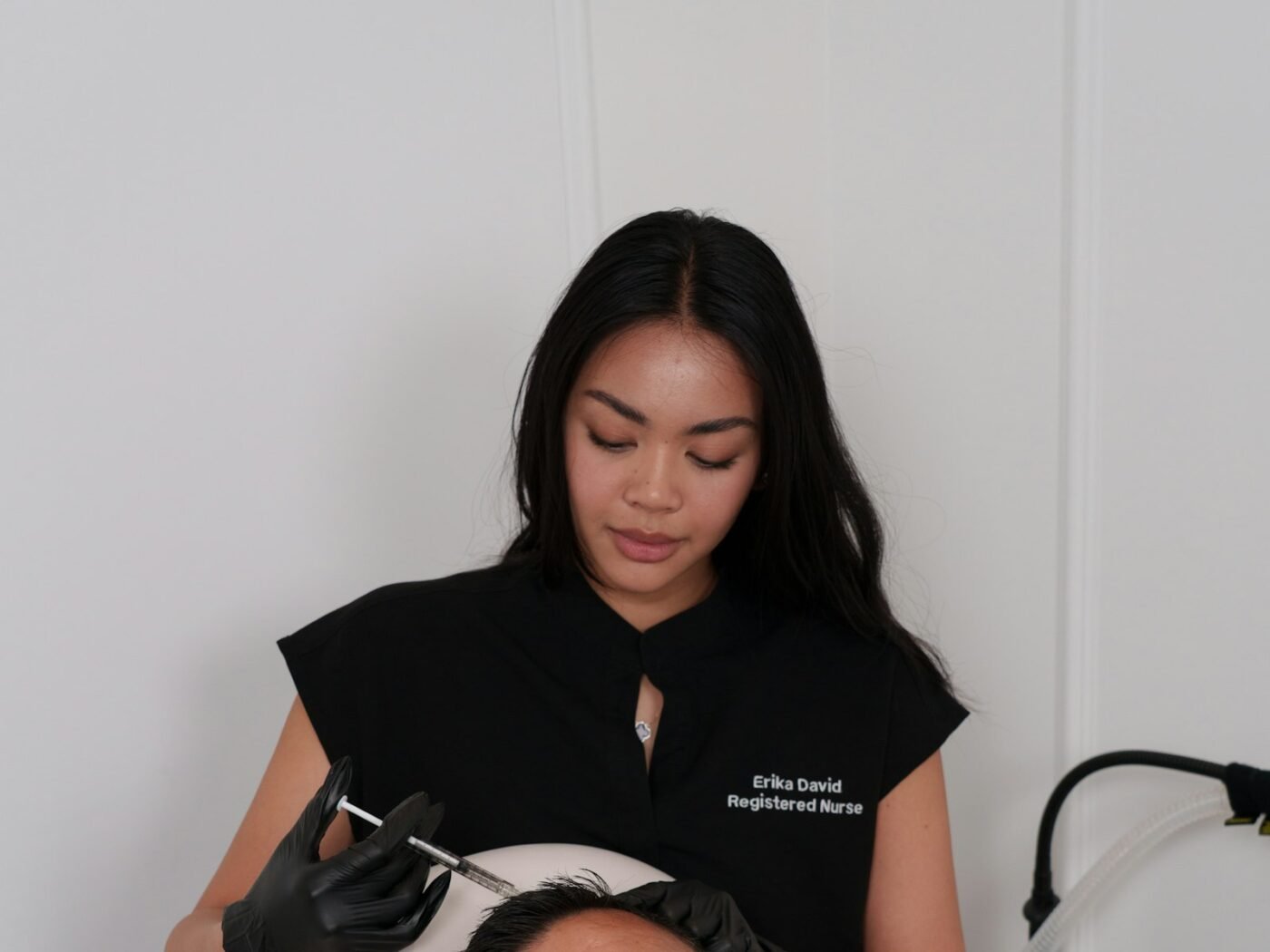
A small amount of your blood is drawn, spun in a centrifuge to concentrate the platelets, and the platelet-rich plasma is injected into the thinning areas of the scalp. Platelets contain growth factors that are thought to support hair follicles, prolong the growth phase and improve hair thickness.
What the evidence says: dermatology sources describe PRP as a safe option for hair loss, and a systematic review found that most published studies reported a benefit in pattern hair loss. Other experts point out that techniques vary widely between clinics and that more high-quality studies are needed. In practice, PRP works best as an add-on to medical treatment, not as a stand-alone cure.
A common schedule is one session a month for three months, then maintenance every three to six months. Each session takes about 30 to 45 minutes including preparation.
4. GFC (growth factor concentrate)
GFC also starts with your own blood, but instead of injecting the plasma, the growth factors are extracted and concentrated from the platelets. The result is a clearer, more concentrated solution. Many clinics find it needs fewer sessions than PRP and causes less discomfort. Like PRP, it is an add-on treatment, not a replacement for finding the cause.
5. Mesotherapy and scalp treatments
Micro-injections or microneedling with vitamins, peptides and other actives, and treatments for dandruff or scalp inflammation. These support a healthy scalp, especially alongside other treatments.
PRP vs GFC at a glance
| PRP | GFC | |
|---|---|---|
| Source | Your own blood | Your own blood |
| What is injected | Platelet-rich plasma | Concentrated growth factors extracted from platelets |
| Typical course | 3 to 4 sessions a month apart, then maintenance | Often fewer sessions, then maintenance |
| Comfort | Small scalp injections; numbing cream helps | Small scalp injections; often slightly more comfortable |
| Best for | Early to moderate thinning, alongside medical treatment | Early to moderate thinning, alongside medical treatment |
| Not suitable for | Some blood disorders, people on blood thinners, active scalp infection | The same |
Who PRP and GFC suit
They work best for:
- early to moderate pattern hair loss, where follicles are still active,
- hair that is thinning rather than completely gone,
- people who are also treating the underlying cause.
They are less useful for:
- areas that are completely bald and smooth for many years, where follicles are no longer active,
- hair fall caused by an untreated deficiency or thyroid problem,
- scarring forms of hair loss, which need a different approach.
They may not be suitable if you have certain blood disorders, take blood thinners, have an active scalp infection, or have some medical conditions. Dr. Kajal checks this before recommending them.
What results to expect, and when
Hair responds slowly. Here is a realistic timeline:
- Weeks 4 to 8: shedding usually slows first.
- Months 3 to 4: new, fine hairs appear, and the scalp looks less see-through.
- Months 6 and beyond: better density and thicker hairs as new growth matures.
We take standard photos at the start and at each review, because day-to-day changes are almost impossible to judge in the mirror.
Hair fall in women: special situations
- After childbirth. Many women notice heavy shedding two to four months after delivery. This is usually postpartum telogen effluvium, and hair typically recovers over the following months. Checking iron and thyroid levels is sensible, since both can be low after pregnancy.
- PCOS. Thinning at the top of the scalp along with irregular periods, acne or excess facial hair can point to PCOS. Treating the hormonal side helps the hair as well.
- Around menopause. Falling oestrogen levels can make pattern thinning more noticeable. Treatment is tailored to your age and health.
- Tight hairstyles and chemical treatments. Buns, braids and ponytails pulled tight every day, and repeated rebonding or smoothing, can cause breakage and thinning at the hairline.
Hair fall in men
For most men, thinning at the temples or crown is pattern hair loss, and the most important factor is starting early. Treatment works best at keeping the hair you have. Once a follicle has been inactive for years, no scalp treatment can bring it back. If you notice a receding hairline in your twenties or thirties, a consultation now gives you the most options.
Men can also have telogen effluvium after illness, stress or crash dieting, especially gym-goers who cut calories or protein sharply.
What decides the cost
Hair treatment is a plan, not a single session. The total depends on the tests you need, the medicines prescribed, the number of PRP, GFC or scalp sessions, and how often maintenance is needed. Ask for the full plan and its cost after your consultation, so there are no surprises three months in.
Everyday habits that help your hair
- Eat enough protein. Hair is made of protein. Crash diets often show up as hair fall two to three months later.
- Be gentle. Avoid very tight hairstyles, frequent heat styling and repeated chemical treatments.
- Wash as often as your scalp needs. Regular washing does not cause hair fall; hair that falls in the shower was already shed.
- Treat dandruff. An itchy, flaky scalp is worth treating.
- Manage stress and sleep. Easier said than done, but both affect the hair cycle.
- Be careful with supplements. Take them for a proven deficiency. More is not always better, and some supplements can affect blood test results.
Dandruff, scalp health and hair fall
An itchy, flaky or oily scalp does not usually cause permanent hair loss, but it can make shedding worse and makes the scalp an unhealthy place for hair to grow. Mumbai's humidity and sweat make dandruff and scalp fungal infections common, especially in the monsoon. Treating the scalp with the right medicated shampoo, and occasionally a scalp treatment in the clinic, is often the first step before PRP or GFC.
Common myths about hair fall
"Oiling stops hair fall." Oil can condition hair and reduce breakage, but it does not treat the causes of hair fall at the root.
"Cutting hair short makes it grow thicker." Cutting does not change the follicle. It may make hair look fuller because the ends are healthier.
"Hair fall from stress is permanent." Stress-related shedding usually recovers once the stress has passed.
"PRP works for everyone." It works best for early to moderate thinning, alongside other treatment, and results vary between people.
When to see a doctor
Book a consultation if you notice:
- sudden heavy shedding for more than a few weeks,
- a widening parting, thinning crown or receding hairline,
- round bald patches,
- an itchy, painful or scaly scalp,
- hair fall together with tiredness, weight change, irregular periods or other symptoms.
Hair fall treatment at Dr. K, Charni Road
At Dr. K Skin Hair Advance Laser Clinic, every hair plan starts with finding the cause. Dr. Kajal Charaniya examines your scalp, advises blood tests only when they will change the plan, and then builds a treatment around your hair: medical treatment, PRP, GFC or scalp therapy, reviewed with photos at every visit.
The clinic is opposite Earth Castle Mall in Charni Road, open all 7 days from 12 to 9 pm. Read more on our hair growth therapies page, or book a consultation.
Frequently asked questions
How much hair fall is normal in a day?
Losing around 50 to 100 hairs a day is normal, because hair grows in cycles. It is worth getting checked if you notice clumps, a wider parting, a thinning crown or more scalp showing than before.
What is the difference between PRP and GFC?
Both use growth factors from your own blood. PRP injects platelet-rich plasma; GFC extracts a more concentrated growth factor solution from the platelets. GFC often needs fewer sessions, but both work best as part of a wider plan.
How many PRP sessions are needed for hair fall?
A common schedule is one session a month for three months, then a maintenance session every 3 to 6 months, depending on how your hair responds.
Is PRP for hair painful?
It involves small injections into the scalp, so there is some discomfort. A numbing cream and a fine needle keep it manageable, and most people go back to their day straight after.
Which blood tests are done for hair fall?
Common tests include a complete blood count, iron studies including ferritin, thyroid function, vitamin B12 and vitamin D. Hormone tests may be added for women with irregular periods, acne or excess facial hair.
Does hair grow back after telogen effluvium?
Usually, yes. Once the trigger such as illness, stress, a crash diet or childbirth has passed and any deficiency is corrected, hair typically regrows over several months.
References
- Telogen effluvium – DermNet
- Telogen Effluvium – StatPearls, NCBI Bookshelf
- Androgenetic Alopecia – StatPearls, NCBI Bookshelf
- Hair loss: Diagnosis and treatment – American Academy of Dermatology
- Systematic review of platelet-rich plasma use in androgenetic alopecia – International Journal of Molecular Sciences
- Male pattern hair loss – DermNet