In this guide
- What is a Hydrafacial?
- What is a medifacial?
- Hydrafacial vs medifacial: side by side
- Which one should you choose?
- Hydrafacial and medifacial for Indian skin
- How often should you get a facial?
- Planning a facial before an event
- What to do before and after
- Home care that makes facials last longer
- What happens at your appointment
- Hydrafacials and medifacials for men
- Is a professional facial worth the money?
- Signs you need more than a facial
- Common questions we hear in the clinic
- Hydrafacial and medifacials at Dr. K, Charni Road
- Frequently asked questions
Walk into any skin clinic in Mumbai and you will see two words on the menu: Hydrafacial and medifacial. Both are sold as the answer to dull, tired, congested skin. Both take about an hour. And most people are not quite sure how they differ, so they pick the one they have heard of most.
This guide explains what each facial actually does, which skin concerns each one suits, how often to book, and how to use them before an event. It is written by the team at Dr. K Skin Hair Advance Laser Clinic in Charni Road, where facials are planned by aesthetic physician Dr. Kajal Charaniya.
Quick answer: a Hydrafacial is a device-led cleanse, extraction and hydration that suits almost everyone and has no downtime. A medifacial is built around one skin concern, such as acne, pigmentation or dullness, using medical-grade actives. If your skin is healthy but tired, start with a Hydrafacial. If you have a specific problem, a medifacial usually does more.
What is a Hydrafacial?
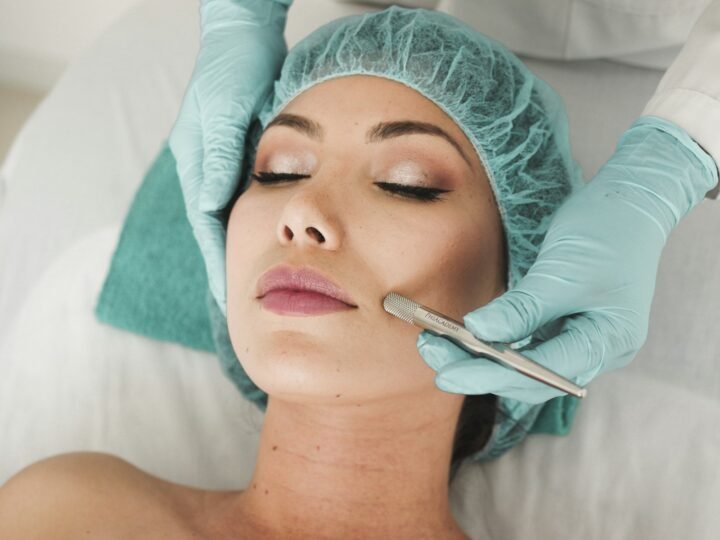
A Hydrafacial is a branded treatment that uses a single device to cleanse, exfoliate, extract and hydrate the skin. Technically, it belongs to a group of treatments called hydradermabrasion. It works like microdermabrasion, but instead of blasting fine crystals at the skin, it uses water-based solutions and gentle suction to lift away dead cells and debris, then pushes serums into the skin in the same pass.
A typical Hydrafacial follows the same sequence:
- Cleanse and exfoliate. A spiral tip with a cleansing solution loosens dead skin and surface oil.
- Gentle acid peel. A mild solution softens what is inside the pores, without the stinging or flaking of a stronger peel.
- Extraction. Vacuum suction lifts out blackheads, oil and debris. No squeezing or pressing.
- Hydrate and protect. Serums with antioxidants and hyaluronic acid are infused into the skin.
- Optional boosters and LED. Depending on your skin, a targeted serum or LED light may be added.
It takes 45 to 60 minutes. Skin looks brighter and smoother straight away, and there is no downtime, so you can go straight back to work or out for dinner.
What a Hydrafacial is good for
- Dull, tired or dehydrated skin
- Clogged pores, blackheads and oiliness
- Uneven texture
- A quick glow before an event
- Regular maintenance for healthy skin
Research on hydradermabrasion has found improvements in fine lines, pore size and uneven pigment after a series of treatments, with very few side effects. Think of it as a deep cleaning and hydration for the skin, not a treatment for deeper problems such as melasma or acne scars.
What is a medifacial?
"Medifacial" is short for medical facial. There is no single machine or brand. A medifacial is a facial designed by a doctor around a specific skin concern, using ingredients and steps you would not find in a salon facial.
A medifacial for acne might include a salicylic acid peel, gentle extraction, an anti-inflammatory mask and blue LED light. One for pigmentation might combine a brightening peel with actives such as vitamin C, arbutin or tranexamic acid. One for dull, tired skin might use a glycolic peel and a hydrating infusion.
The difference is not just the products. It is that the facial starts with a diagnosis. Dr. Kajal looks at your skin, asks about your routine and history, and then chooses the steps, the strength and the frequency.
What a medifacial is good for
- Active acne, whiteheads and oily, congested skin
- Tanning and uneven tone
- Early pigmentation and dark spots
- Sensitive or reactive skin that needs calming
- Dull skin that has not responded to regular facials
A medifacial is usually part of a plan: a series of 4 to 6 sessions a few weeks apart, alongside the right home care.
Hydrafacial vs medifacial: side by side
| Hydrafacial | Medifacial | |
|---|---|---|
| What it is | A branded, device-based treatment with a set sequence | A doctor-designed facial built around one concern |
| Best for | Dullness, congestion, dehydration, pre-event glow | Acne, tanning, pigmentation, sensitivity |
| Time | 45 to 60 minutes | 45 to 60 minutes |
| Downtime | None | None to a little redness; light flaking if a stronger peel is used |
| Feels like | Cool, wet suction; relaxing | Varies; a peel may tingle for a few minutes |
| How often | Monthly, or 3 to 5 days before an event | Every 2 to 4 weeks as a course |
| Results | Instant glow that lasts about a week; texture improves over months | Builds over a course of sessions |
Which one should you choose?
Here is a simple way to decide.
Choose a Hydrafacial if:
- your skin is generally healthy but looks dull, tired or congested,
- you want a reliable glow before a wedding, festival or photoshoot,
- you have never had a professional facial and want a gentle start,
- you want a monthly maintenance treatment with no downtime.
Choose a medifacial if:
- you have active acne or frequent breakouts,
- you have tanning, dark spots or uneven tone that is not going away,
- your skin is sensitive and reacts to regular facials,
- you have tried facials before and seen little lasting change.
Combine them if: you have a specific concern but also want to look your best for an event. A common plan is a course of medifacials for the concern, with a Hydrafacial a few days before the event itself.
Hydrafacial and medifacial for Indian skin
Brown skin is prone to post-inflammatory hyperpigmentation. In plain words, anything that irritates the skin, from an aggressive scrub to a strong peel to squeezing a pimple, can leave a dark mark that lasts for weeks or months.
This is why gentle matters. A Hydrafacial uses suction instead of manual squeezing, and mild solutions instead of harsh peels, so it rarely leaves marks. In a medifacial, the peel strength and actives are chosen for your skin type, and stronger options are introduced gradually.
Two habits make the biggest difference for Indian skin after any facial:
- Use sunscreen every day. Freshly exfoliated skin is more sensitive to the sun. A broad-spectrum sunscreen of SPF 30 or higher, reapplied during the day if you are outdoors, protects the result.
- Do not pick. If a pimple appears after a facial, leave it alone or get it treated. Picking is the most common cause of dark marks.
How often should you get a facial?
Skin renews its outer layer roughly once a month, which is why monthly timing works well for maintenance.
- Hydrafacial: once a month for maintenance. Every 2 to 3 weeks for a short series if your skin is very congested.
- Medifacial: usually a course of 4 to 6 sessions, 2 to 4 weeks apart, then maintenance every 4 to 8 weeks.
More is not always better. Too many exfoliating treatments too close together can leave skin sensitive and red, especially in Mumbai's humid months, when skin is already producing more oil and sweat.
Planning a facial before an event
Timing is the most common mistake we see. People book a strong treatment two days before a wedding and spend the day covering redness.
- 8 to 12 weeks before: start a medifacial course if you have acne or pigmentation to fix. This gives enough time for results to build.
- 2 to 4 weeks before: your last medifacial with any peel.
- 3 to 5 days before: a Hydrafacial for the final glow.
- The last week: nothing new. No new products, no new treatments, no experiments.
Our guide to a pre-wedding skin plan goes through the full three-month timeline.
What to do before and after
Before your facial:
- Stop retinol, retinoid creams and strong exfoliating acids 2 to 3 days before, unless your doctor says otherwise.
- Avoid waxing, threading or laser on the face for a few days before.
- Tell us if you have a cold sore, active infection or a recent sunburn.
After your facial:
- Keep skincare simple for 24 to 48 hours: a gentle cleanser, a moisturiser and sunscreen.
- Avoid makeup for a few hours if you can, to let the skin breathe.
- Skip steam, saunas and heavy workouts for the rest of the day.
- Hold off on scrubs, retinoids and strong acids for 2 to 3 days.
Home care that makes facials last longer
A facial every month cannot make up for what you do every day. The biggest wins are simple:
- A gentle cleanser twice a day, and after workouts.
- A light moisturiser, even if your skin is oily. Dehydrated skin often produces more oil.
- Sunscreen every morning, rain or shine. Mumbai's monsoon clouds still let through the light that causes tanning and pigmentation.
- One targeted active, such as niacinamide for oil control or vitamin C for brightness, chosen for your skin.
- Enough sleep and water. Obvious, but it shows on the skin faster than any serum.
What happens at your appointment
Whether you come in for a Hydrafacial or a medifacial, the visit follows the same shape.
- A short skin check. Dr. Kajal looks at your skin under good light, asks what bothers you most, what you use at home, and whether you have had reactions to treatments before. This is where the choice between a Hydrafacial and a medifacial is made.
- Cleansing and preparation. Makeup and sunscreen are removed, and the skin is prepared for the treatment chosen.
- The treatment itself. For a Hydrafacial, the device steps through cleansing, peeling, extraction and hydration. For a medifacial, the steps depend on the concern: a peel, extraction if needed, a targeted mask or serum, and sometimes LED light.
- Finishing. A moisturiser and sunscreen go on before you leave.
- Your plan. You leave knowing how often to come back, what to use at home, and what to avoid for the next few days.
The whole visit takes about an hour. You can go straight back to work or out for the evening.
Hydrafacials and medifacials for men
Men's skin is usually thicker and oilier, with larger pores, and daily shaving adds irritation, ingrown hairs and razor bumps. Both facials work well for men:
- A Hydrafacial deep-cleans large, congested pores and calms skin that is dull from pollution and long commutes.
- A medifacial for men often targets oil control, acne along the beard line, or darkening around the jaw from shaving.
Tell us if you shave daily, so we can time the treatment and avoid shaving immediately before or after.
Is a professional facial worth the money?
A good facial is not a luxury if it is doing a job. The value comes from three things a home routine cannot do:
- Safe extraction. Suction or trained extraction clears blackheads without the squeezing that leaves marks on brown skin.
- Controlled exfoliation. Peels at the right strength, chosen for your skin, give results that over-the-counter products cannot safely match.
- A diagnosis. A doctor can tell you when a "dull skin" problem is really early melasma, hormonal acne or a reaction to a product you use at home.
What decides the cost is the type of facial, the products and devices used, and whether it is part of a course. Ask for the price of the full plan, not just one session, so you can compare fairly.
Signs you need more than a facial
Facials improve the surface of the skin. Some problems sit deeper and need a different treatment. It is time to ask about other options if you have:
- Acne scars with dips or pits in the skin. These need collagen-building treatments. See our guide to acne scars.
- Melasma or deep patches that return after every facial.
- Painful, cystic acne, which needs medical treatment.
- Loose skin or deep lines, which respond to skin tightening, fillers or other anti-ageing treatments.
A good clinic will tell you honestly when a facial is not the right tool.
Common questions we hear in the clinic
"Will a Hydrafacial remove my pigmentation?" It can brighten skin and slightly even the tone over several sessions, but it is not a pigmentation treatment. For stubborn dark spots or melasma, read our guide to pigmentation and melasma.
"Will a facial make me break out?" A professional facial should not. A few people get a small pimple or two in the days after extraction as pores clear. If you are acne-prone, tell us so the steps can be adjusted.
"Is a salon facial the same as a medifacial?" No. A salon facial is mainly relaxation and surface cleansing. A medifacial uses medical-grade actives chosen after a skin assessment by a doctor.
Hydrafacial and medifacials at Dr. K, Charni Road
At Dr. K Skin Hair Advance Laser Clinic, every facial starts with a short skin check with Dr. Kajal Charaniya, so you get the right treatment rather than the most expensive one. Our Hydrafacial and medifacials suit Indian skin and Mumbai's climate, and neither has downtime.
The clinic is opposite Earth Castle Mall in Charni Road, open all 7 days from 12 to 9 pm. Read more on our Hydrafacial and medifacials page, or book a consultation.
Frequently asked questions
What is the difference between a Hydrafacial and a medifacial?
A Hydrafacial is one specific device-based treatment that cleanses, exfoliates, extracts and hydrates in a set sequence. A medifacial is a doctor-designed facial where the peel, actives and devices are chosen for one concern, such as acne, pigmentation or dullness.
Is a Hydrafacial good for acne-prone skin?
It can help with clogged pores, oiliness and blackheads. For active, inflamed acne, a medifacial with acne-specific actives, alongside medical treatment, is usually the better choice.
How often should I get a Hydrafacial?
Once a month suits most people for maintenance. Before an event, book it 3 to 5 days ahead.
Is there any downtime after a Hydrafacial or medifacial?
A Hydrafacial has no downtime. Most medifacials have none or a little redness for a few hours; if a stronger peel is part of the medifacial, light flaking for a few days is possible.
Can I get a Hydrafacial before my wedding?
Yes. It is one of the safest pre-event treatments. Book the last one 3 to 5 days before, and do not try a new, stronger treatment in the final two weeks.
References
- Skin resurfacing procedures: new and emerging options – Clinical, Cosmetic and Investigational Dermatology
- Microdermabrasion: Overview – American Academy of Dermatology
- Microdermabrasion: FAQs – American Academy of Dermatology
- HydraFacial – Northwestern Medicine
- How to select a sunscreen – American Academy of Dermatology